

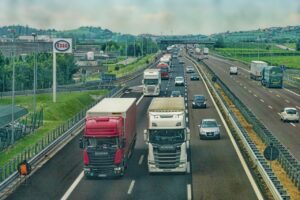
Discover how road transportation supports domestic logistics, supply chain connectivity, fleet management, road safety, and economic development.
The Road Network as an Economic Lifeline
Road transportation remains one of the most accessible and indispensable components of modern transportation systems. Across developed and developing economies, road networks provide the physical connections that facilitate the movement of people, agricultural produce, industrial materials, manufactured goods, and essential services between communities, businesses, commercial centres, and international trade gateways.
Beyond its traditional function of moving passengers and cargo, road transportation serves as a strategic economic instrument. It connects production facilities with distribution centres, warehouses with retail outlets, farms with markets, and seaports with inland destinations. Without an effective road transportation network, the movement of goods across several stages of the supply chain would become considerably more difficult, expensive, and inefficient.
Road Transportation and Supply Chain Connectivity
One of the greatest contributions of road transportation is its ability to provide flexible, direct, and geographically extensive connectivity.
Unlike some transportation modes that depend on dedicated terminals, railway stations, airports, or seaports, road transport can deliver goods directly to warehouses, manufacturing facilities, business premises, and customers.
This flexibility makes road transportation particularly important for first-mile and last-mile logistics operations.
For businesses operating in manufacturing, agriculture, retail, construction, and distribution, reliable road transportation directly influences inventory availability, delivery schedules, customer satisfaction, and operational continuity.
The Strategic Importance of Fleet Management
Effective road transportation requires more than the availability of commercial vehicles. It demands structured fleet management systems that coordinate vehicle utilisation, driver performance, maintenance schedules, fuel consumption, route planning, regulatory compliance, and operational costs.
Poor fleet management can result in unnecessary vehicle downtime, excessive fuel expenditure, delayed deliveries, increased maintenance costs, and reduced profitability.
Modern fleet management increasingly incorporates telematics, GPS tracking, digital vehicle monitoring, transportation management systems, and predictive maintenance technologies.
These innovations enable transport operators to monitor fleet performance, improve resource allocation, identify operational weaknesses, and make evidence-based decisions.
Road Transportation Safety: A Non-Negotiable Responsibility
The efficiency of road transportation should never be measured exclusively by delivery speed or operational profitability.
Safety remains a fundamental requirement.
Road accidents, reckless driving, vehicle overloading, inadequate vehicle maintenance, driver fatigue, and poor road conditions represent significant risks to passengers, drivers, pedestrians, cargo, and other road users.
Transport organisations must establish comprehensive road safety policies covering driver recruitment, professional training, vehicle inspections, journey management, speed control, and emergency response procedures.
A strong safety culture protects human lives while reducing accident-related financial losses and operational disruptions.
Infrastructure Development and Economic Productivity
The quality of road infrastructure has considerable influence on transportation efficiency and national economic development.
Well-maintained highways, bridges, access roads, and urban road networks reduce travel delays, improve market accessibility, and support the movement of goods and services.
Conversely, deteriorating roads, inadequate drainage, traffic congestion, and insufficient transport infrastructure increase logistics costs and weaken supply chain reliability.
For developing economies, strategic investment in road infrastructure is particularly important for connecting rural agricultural communities with commercial markets and industrial centres.
Technology and the Future of Road Transportation
The road transportation industry is experiencing significant technological transformation.
Artificial intelligence, digital route optimisation, electric commercial vehicles, automated fleet monitoring, and intelligent traffic management systems are creating opportunities for improved operational performance.
Electric vehicles also present opportunities to reduce dependence on conventional fuels and minimise transportation-related emissions, although charging infrastructure, acquisition costs, and vehicle range remain important considerations.
The future competitiveness of road transportation will increasingly depend on the industry’s ability to combine infrastructure development, technological innovation, professional management, and environmental responsibility.
Building Stronger Roads for a More Connected Economy
Road transportation is much more than a means of moving passengers and cargo. It is an essential economic network that supports trade, industrial productivity, agricultural distribution, employment, and national development.
Its effectiveness depends on the quality of infrastructure, professional fleet management, responsible driving practices, technological adoption, and effective transportation policies.
As global supply chains continue to evolve, investment in safer, smarter, and more reliable road transportation systems will remain essential for economic competitiveness and sustainable development.
Thank you for reading.
Image credited to pixabay
